
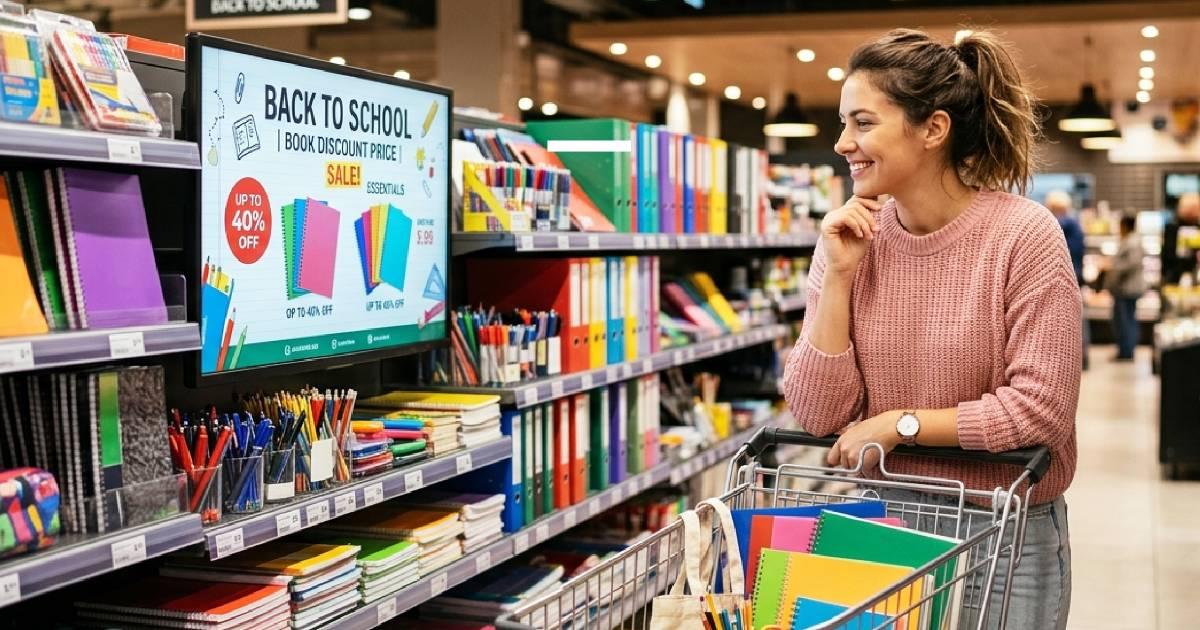
Back-to-school season brings increased in-store shopping activity, making indoor DOOH one of the most effective ways for brands to connect with consumers in real time. As parents and students spend more time in grocery stores, pharmacies, restaurants, and retail spaces, indoor digital screens help brands stay visible closer to the point of purchase. The blog explores how contextual messaging, dynamic content, and strong creative strategies help drive better engagement, recall, and purchase decisions during one of the busiest retail seasons of the year.
Introduction
Back-to-school season has evolved into one of the biggest retail periods of the year. What once centered mainly around notebooks and backpacks now influences shopping behavior across grocery, pharmacy, restaurant, apparel, technology, and convenience retail environments.
For brands, this season creates a major opportunity to connect with consumers when purchase intent is already high. Parents are preparing for new routines, students are getting ready for the school year, and households are making more frequent shopping trips over a short period of time.
At the same time, the way consumers engage with advertising is changing. Traditional digital channels are increasingly crowded, while online audiences are experiencing ad fatigue from constant scrolling and repeated promotions. Meanwhile, physical retail spaces continue to attract highly engaged shoppers making real-time purchasing decisions.
This is where Indoor Digital Out-of-Home (DOOH) becomes especially effective.
Indoor DOOH places advertising directly inside grocery stores, pharmacies, restaurants, convenience stores, and other retail environments where consumers are already in a buying mindset. Rather than interrupting the experience, it becomes part of the shopper journey itself.
During back-to-school season, this matters even more because consumers are:
* Visiting stores more frequently
* Spending longer periods inside retail environments
* Making quicker purchase decisions
* Responding to convenience and value-driven messaging
* More likely to make impulse purchases
These behaviors create an ideal environment for indoor DOOH campaigns to perform strongly.
The Scale of Back-to-School Spending
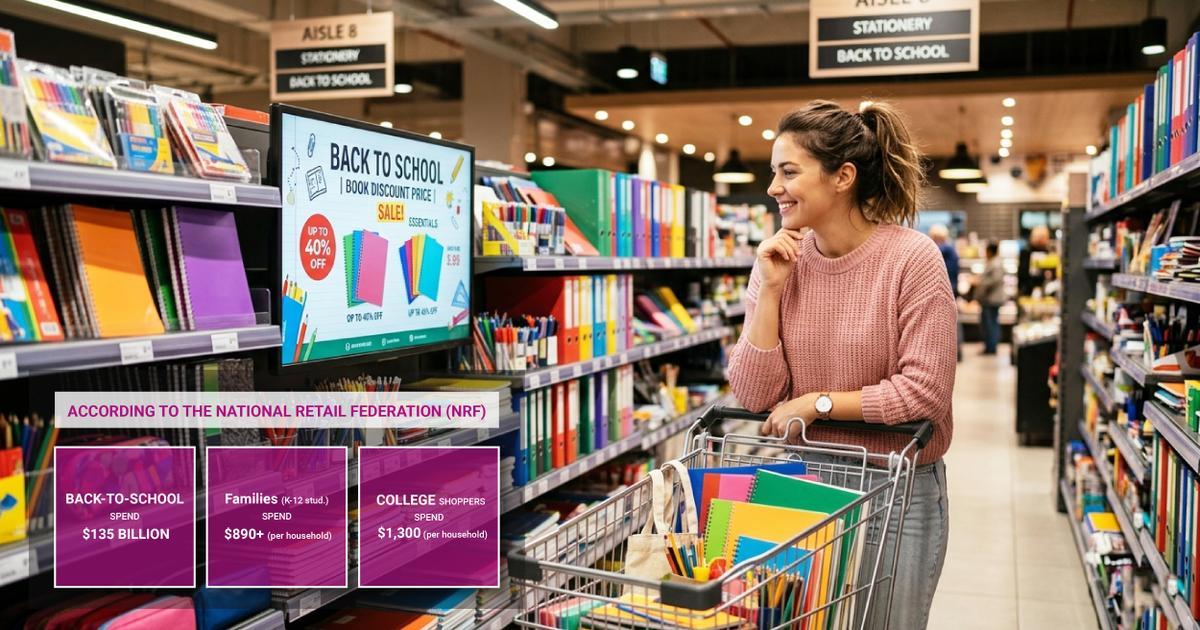
Back-to-school remains one of the largest seasonal retail events in the U.S. economy.
According to the National Retail Federation (NRF):
* Combined back-to-school and college spending has exceeded $135 billion in recent seasons
* Families with K–12 students spend an average of $890+ per household
* College shoppers spend more than $1,300 per household on average
This seasonal spending extends far beyond school supplies, creating valuable opportunities for brands across multiple retail environments.
Why Indoor DOOH Performs Better During Back-to-School Season
1. Longer In-Store Engagement
Back-to-school shopping rarely happens in one quick visit. Families often return to stores multiple times over several weeks, comparing products, checking promotions, and completing last-minute purchases.
This longer dwell time naturally increases exposure to indoor digital screens. Research from retail media studies shows that:
* Consumers are more likely to notice ads in high-dwell retail environments
* DOOH exposure near the point of purchase improves recall and conversion rates
* Nearly 70% of purchase decisions are made in-store
This gives brands the opportunity to influence consumers while decisions are actively being made.
2. Reaching Consumers Closer to Purchase
Unlike mobile or social ads that may appear hours before a purchase, indoor DOOH reaches consumers while they are actively shopping.
For example:
* A parent shopping for lunchbox items notices a snack promotion nearby
* A student at checkout sees a beverage offer
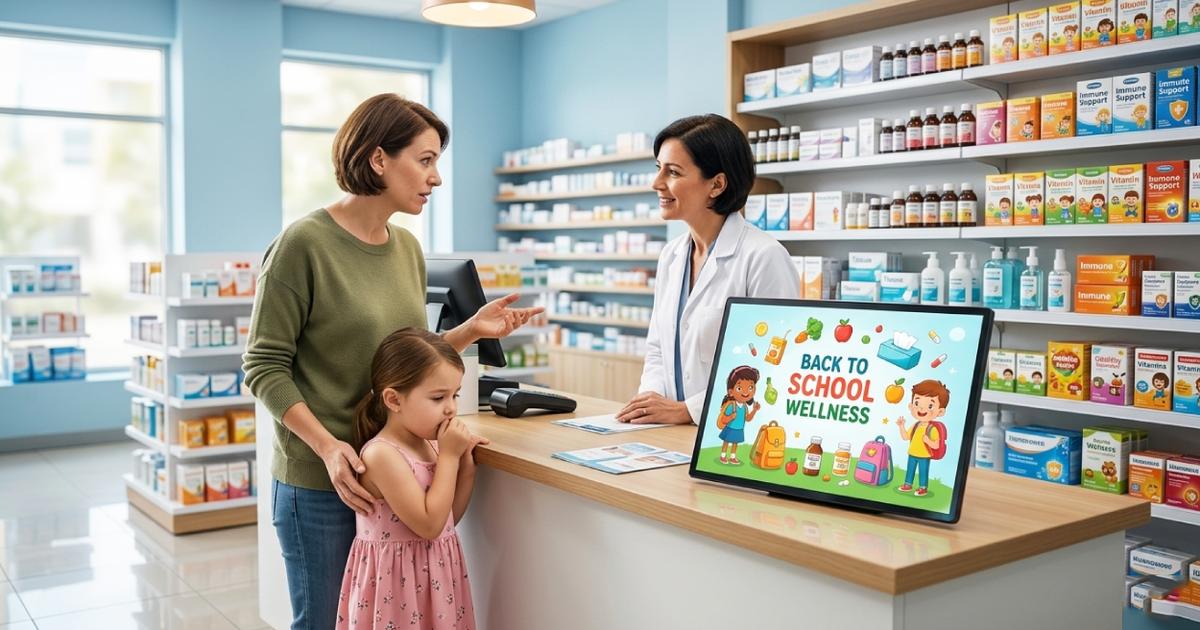
* A pharmacy visitor sees wellness products promoted during school season
Because the message appears close to the point of purchase, consumers can respond immediately.
3. Repeated Exposure Improves Recall
Back-to-school shoppers often revisit stores multiple times throughout the season. This creates repeated exposure opportunities that help reinforce brand familiarity.
Research consistently shows that repeated exposure improves:
* Brand awareness
* Product recognition
* Purchase intent
* Impulse buying behavior
For seasonal campaigns, frequency plays a major role in driving stronger results.
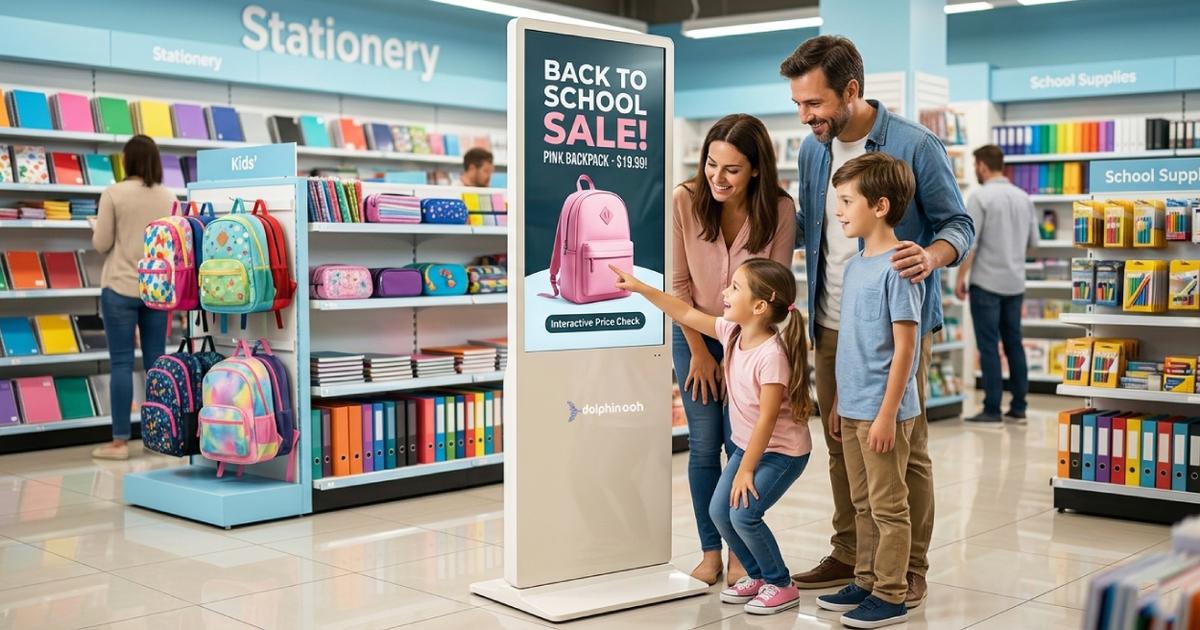
Retail Categories Seeing Strong Back-to-School Impact
Grocery & Snacks
Families increase spending on lunchbox snacks, breakfast items, beverages, and easy meal solutions during the school season. Indoor DOOH helps brands remain visible during active product selection.
Restaurants & Quick-Service Dining
Busy school schedules increase demand for convenient meals and grab-and-go options. Promotions around breakfast, combo meals, coffee, and after-school snacks perform especially well in restaurant environments.
Pharmacies & Wellness Products
Back-to-school season also drives increased interest in health and wellness products, including vitamins, sanitizers, and cold and flu essentials. Indoor pharmacy screens offer highly relevant placement opportunities.
Technology & Electronics
Students and families continue investing in laptops, headphones, accessories, and mobile services ahead of the school year. Indoor DOOH helps reinforce promotions during high-intent shopping moments.
Why Context Matters More During Back-to-School Season
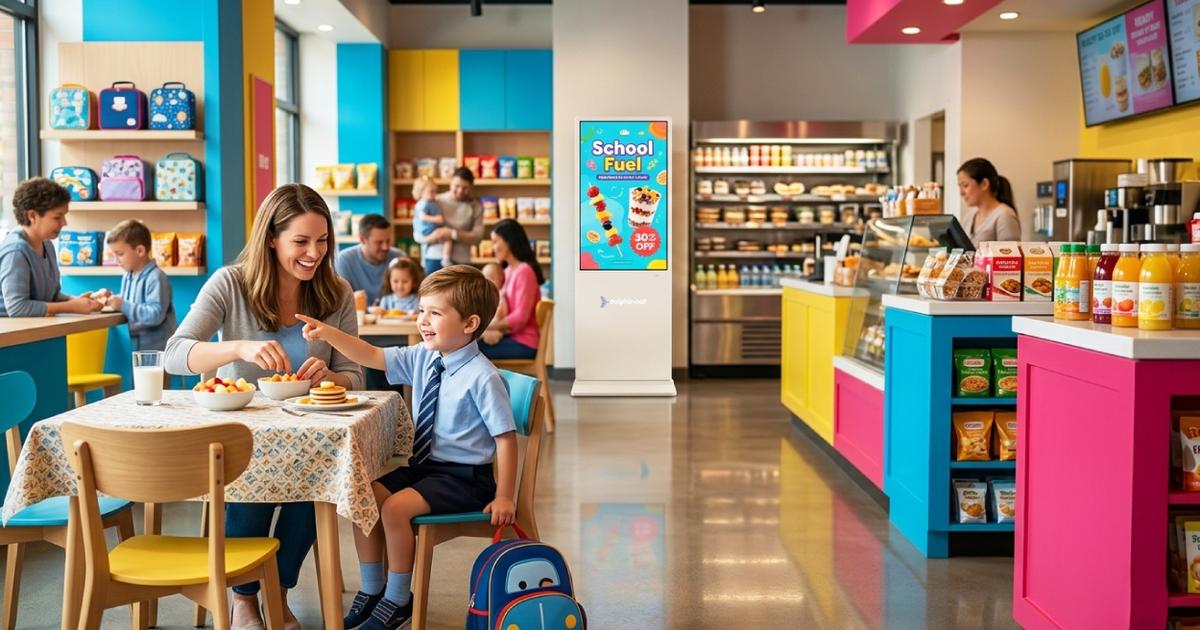
One of indoor DOOH’s biggest advantages is contextual relevance. Advertising performs better when messaging aligns with the shopper’s environment and mindset.
During back-to-school season, consumers are already focused on preparation, routines, convenience, and budgeting. Messaging that reflects these priorities feels more natural and timely.
Examples include:
* “Lunchbox favorites for the new school year”
* “Fuel busy mornings”
* “Healthy snacks for after school”
* “Quick meals for busy families”
This type of messaging works because it connects directly to the shopper’s current needs and behavior.
The Power of Dynamic Content
Dynamic DOOH allows advertisers to update messaging in real time based on:
* Time of day
* Weather conditions
* Promotions
* Inventory availability
* Store traffic patterns
For example:
Morning:
“Start the school day with fresh coffee.”
Afternoon:
“After-school snack deals available now.”
Weekend:
“Stock up before Monday.”
This flexibility keeps campaigns fresh, relevant, and engaging throughout the shopping season.
Creative Strategies That Perform Best
Back-to-school shoppers are busy and distracted, which makes simple, visually clear creative especially important.
What Works Best
Short Messaging
Headlines with 5–7 words perform better than text-heavy creatives.
Bold Visuals
Large product imagery captures attention faster in busy retail environments.
Clear Offers
Consumers respond strongly to discounts, bundles, and value-driven messaging.
Seasonal Relevance
Creative connected to school routines performs better than generic campaigns.
QR Code Integration
QR codes help bridge physical advertising with coupons, promotions, and digital engagement.
Why Indoor DOOH Creates Stronger Engagement
Consumers are increasingly overwhelmed by online advertising. Banner blindness and ad fatigue continue to reduce engagement across traditional digital platforms.
Indoor DOOH offers a different experience because:
* It exists naturally within the retail environment
* It cannot be skipped or blocked
* It reaches shoppers during active decision-making moments
* It captures attention without disrupting the experience
Recent DOOH industry studies also show that:
* DOOH campaigns improve ad recall compared to traditional digital display advertising
* Consumers view retail-based advertising as more relevant and trustworthy
* Contextual DOOH campaigns generate stronger engagement than non-contextual messaging
Conclusion
Back-to-school season creates a valuable opportunity for brands to connect with highly engaged consumers. Families are shopping more frequently, spending more time in stores, and making purchasing decisions in real time.
Indoor DOOH performs especially well during this period because it reaches consumers inside environments where buying decisions naturally happen. From grocery stores and pharmacies to restaurants and convenience locations, indoor digital screens help brands remain visible, relevant, and connected to shoppers throughout their journey.
When combined with contextual messaging, dynamic content, and strong creative execution, indoor DOOH becomes more than advertising—it becomes part of the shopping experience itself.
For brands looking to maximize visibility during the back-to-school season, Dolphin Retail Media provides access to high-traffic indoor environments where audiences are engaged, attentive, and ready to act.
References
National Retail Federation (2025). Back-to-school spending trends and consumer insights – [National Retail Federation]
Out of Home Advertising Association of America (2025). DOOH advertising effectiveness report – [OAAA DOOH Report]
PosterBooking (2025). Digital signage statistics and trends – [Digital Signage Statistics for 2025]
Statista (2025). Back-to-school shopping statistics in the United States – [Back-to-School Shopping Statistics]
StackAdapt (2025). Benefits of retail and DOOH advertising – [Benefits of Digital Out-of-Home Advertising]