The Non-Endemic Brand's Secret Weapon: Why the Grocery Store Is Your Best Media Buy
Aug 31, 2026
The grocery store is no longer just for grocery brands. This blog explores why banks, insurance companies, telecom providers, and other non-endemic brands are using in-store DOOH to reach consumers in high-attention, real-world moments where everyday decisions are made.
Your product isn't on any shelf. So why should you advertise inside a store?
Here's the answer that's changing how the smartest brands think about media in 2026.
The person pushing a cart through the grocery aisle on a Tuesday evening isn't just a grocery shopper. They're the same person who will renew the family's insurance this month, compare mobile plans next week, and decide which credit card to use for the next year. 98% of grocery shoppers are the primary household decision-makers for finance, telecom, and insurance. That's not a retail audience. That's every brand's audience - concentrated, recurring, and already in a spending mindset.
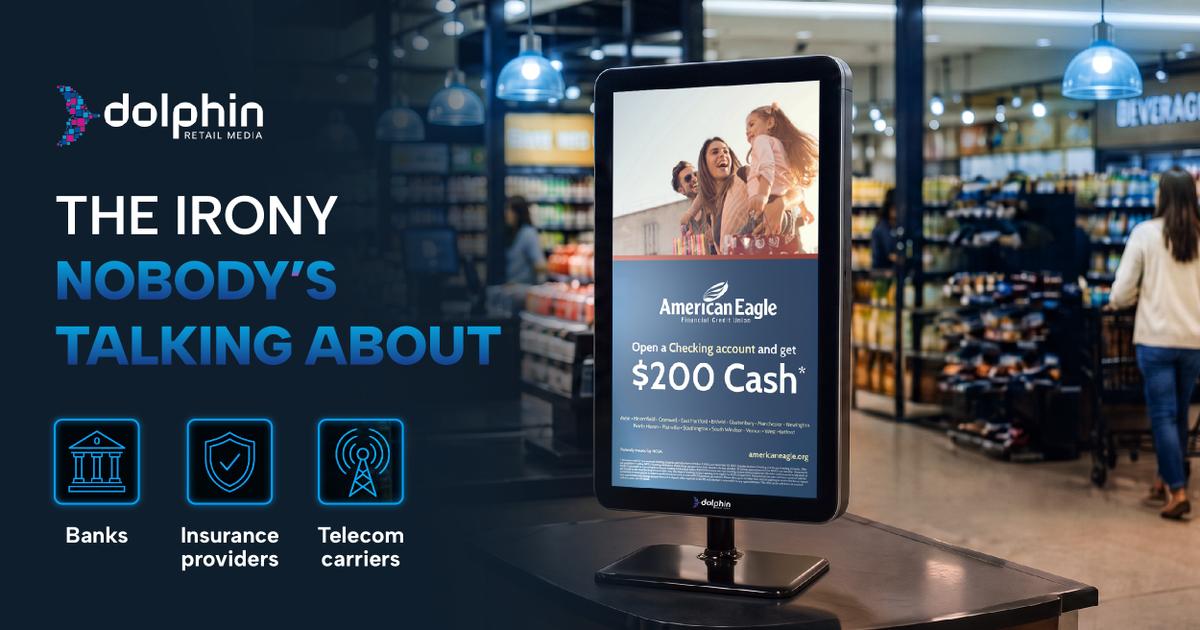
The Irony Nobody's Talking About
The fastest movers into in-store advertising right now aren't cereal brands or beverage companies. They're banks, insurance providers, and telecom carriers - brands with nothing on the shelves. Because they don't carry the baggage that slows endemic brands down. No trade marketing silos. No agency relationship conflicts. They move from brand budgets, they move fast, and they've discovered something fundamental: the store is not a vertical. It's a demographic.
Why Digital Can't Do What In-Store Does
Digital advertising reaches people between moments of intent. A pre-roll interrupts a video. A retargeting banner follows someone around for a week. A social post competes with a friend's photo. In-store DOOH is different. It reaches people during a moment of intent — while they're actively spending money, actively aware of what things cost, and actively making decisions that extend well beyond what's in their basket. A health insurance brand on a pharmacy screen reaches a patient who just collected their prescription. A telecom provider in a grocery store reaches a family in their most routine, receptive weekly moment. A financial services brand at a convenience store at 7am reaches a commuter already thinking about the day ahead. This isn't mass reach hoping for relevance. This is contextual precision at scale.
The Creative Freedom Non-Endemic Brands Don't Realise They Have
Endemic brands carry a creative burden - every ad lives ten feet from the actual product on the shelf. Every message has to be promotional, price-driven, category-specific. Non-endemic brands? They're free. A bank can lead with a life moment. An insurance brand can lead with empathy. A telecom provider can lead with connection. The store gives the context. The brand brings the story. And the shopper - already in decision-making mode - receives it in a moment of genuine attention. The rules are simple: one strong visual, one clear message, silent-first creative that works in three seconds.
The Measurement Gap Is Closing
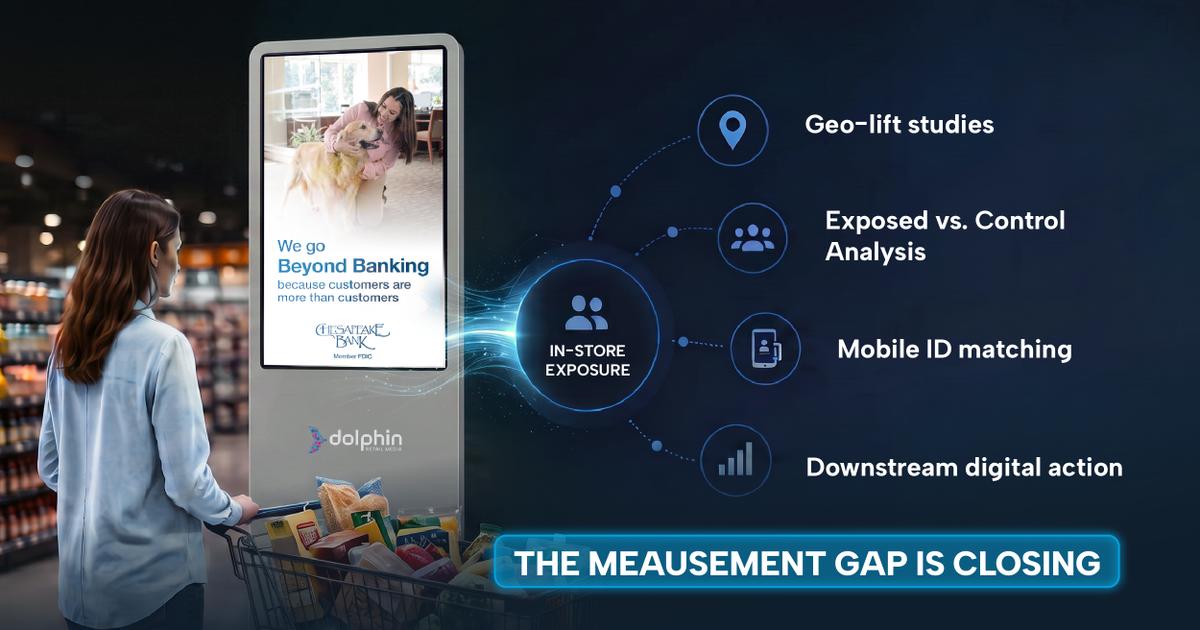
The fair question has always been: if the purchase doesn't happen in the store, how do you measure it? In 2026, the answer is clearer than ever. Geo-lift studies, exposed-versus-control analysis, and mobile ID matching between in-store exposure and downstream digital action are all closing the attribution loop for non-endemic brands. Whether the goal is app downloads, quote requests, account openings, or brand recall - the tools to measure it now exist and are being used at scale. The brands moving now are building measurement baselines and frequency advantages before their category competitors arrive.
Who Should Be Activating Right Now
Financial services - banks, credit unions, and investment platforms reaching household decision-makers in their most financially aware weekly routine. Insurance — health, auto, and home insurance brands reaching consumers when coverage is most top of mind. Telecom — mobile carriers and broadband providers reaching families across the routine trips that define their connected lives. Healthcare and wellness - telehealth platforms and wellness services reaching health-conscious shoppers where they already go for health decisions. Travel and hospitality — airlines and hotel brands reaching aspirational shoppers in the weekly routine that funds their next trip. The common thread isn't the category. It's intent.
Where Dolphin Retail Media Comes In
Dolphin Retail Media operates 6000+ digital screens across 140+ DMAs - inside grocery stores, pharmacies, convenience stores, and dining venues - delivering 375 million Geopath-verified impressions every week. For non-endemic brands, this isn't just reach. It's the right reach — in the right context, at the right moment, verified by a third party, and accessible programmatically through leading SSPs. The grocery store was never just for grocery brands. In 2026, it's one of the most powerful media environments available to any brand willing to show up there.
Dolphin Retail Media - putting your brand where the decisions are made.
References
eMarketer / Insider Intelligence. (2026). FAQ on non-endemic retail media: Leaders, data uses, and what's new for 2026.
eMarketer / Insider Intelligence. (2026). 5 charts on what's shaping retail media through 2028.
Grocery TV & Vistar Media. (2023). Programmatic in-store advertising: The untapped opportunity for non-endemic brands.
MediaRadar / eMarketer. (2026). Financial and insurance brands pushed ad spending to new heights in H1 2025.
Merkle. (2023). Non-endemic brand participation in retail media networks. As cited in eMarketer Retail Media Forecast.
StackAdapt / OAAA. (2025). DOOH consumer sentiment and action study.