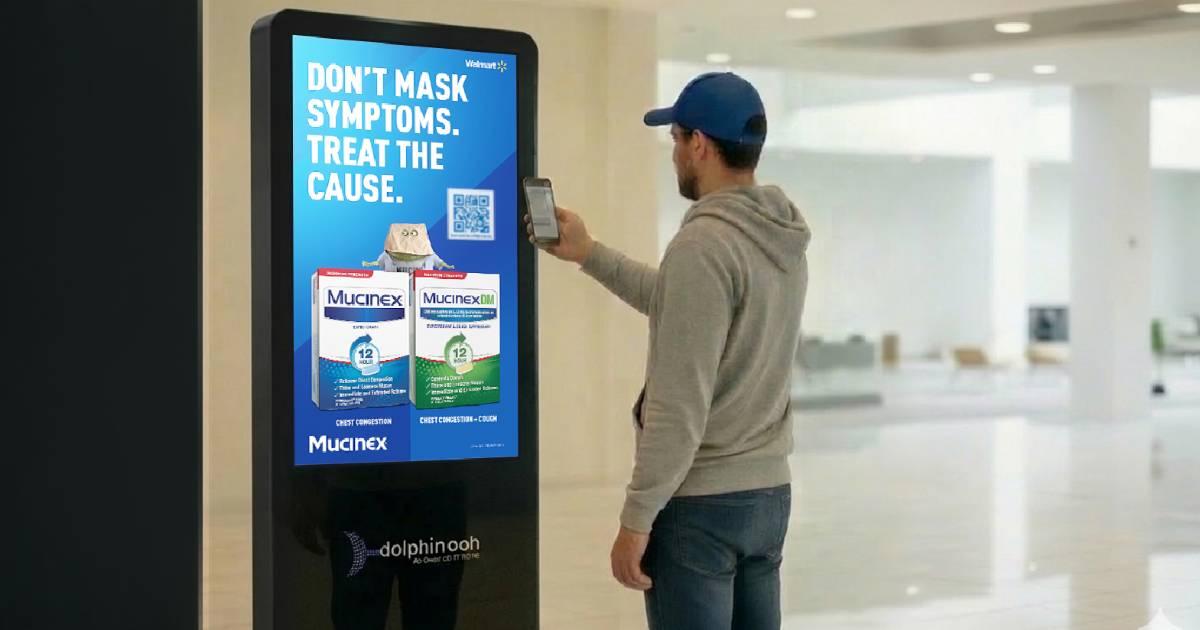
Effective indoor DOOH creative comes down to clarity, motion, and relevance. Short, visually strong content that delivers a clear message in seconds performs best, especially when tailored to context and paired with simple actions like QR engagement. In fast-moving environments, the creatives that win are the ones that are easy to understand and hard to ignore.
Introduction
Most ads are seen. Very few are remembered. Even fewer drive action.
That gap comes down to one thing: creative.
Indoor Digital Out-of-Home (DOOH) sits in a unique space. Unlike mobile or social, you don’t get endless time, clicks, or sound. You get a few seconds, real-world distractions, and a moving audience. But here’s the upside—when done right, DOOH doesn’t just get noticed, it drives real behavior.
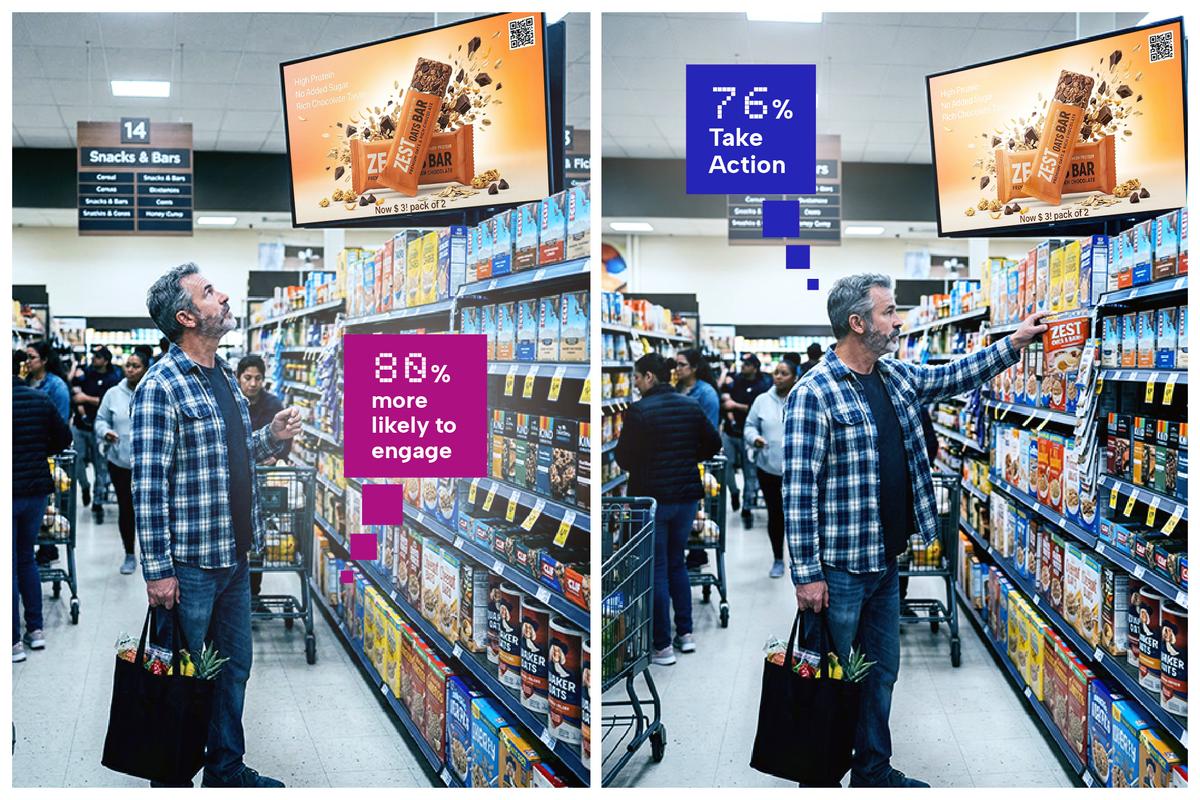
In fact, 76% of consumers take action after seeing a DOOH ad, and 80% are more likely to act when the creative is visually strong and engaging .
So what actually works on indoor screens today? Let’s break it down.
1. Formats That Actually Capture Attention
Not all formats perform equally. The best-performing DOOH creatives share one thing: they are built for how people move, not how people scroll.
1. Short-Loop Video (The Gold Standard)
Video remains the most effective format on indoor screens.
Video content gets up to 5x more views than static creatives
Motion naturally pulls attention in high-traffic environments
What works:
6–10 second loops
Clear product focus within the first 2 seconds
Subtle motion (not overwhelming animation)
Why it converts: It mimics how people notice movement in real life.
2. Bold Static Creatives (Still Powerful)
Static isn’t dead. Bad static is.
80% of viewers are more likely to act when creatives are visually bold
What works:
One strong visual
One message
High contrast colors
Why it converts: Clarity beats complexity when attention spans are short.
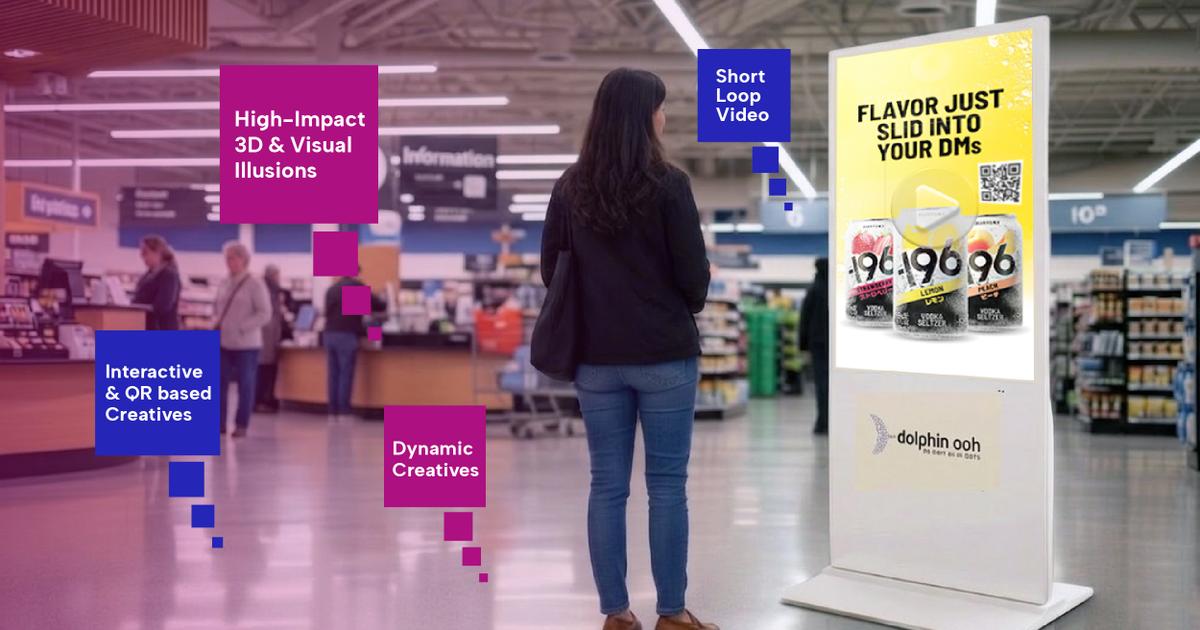
3. Contextual & Dynamic Creatives
This is where DOOH pulls ahead of every other channel.
Weather-triggered ads increase engagement by up to 50%
Contextual triggers improve effectiveness by ~17%
What works:
Time-based messaging (morning coffee vs evening meals)
Weather-based creatives (cold drink vs hot beverage)
Location-specific messaging
Why it converts: Relevance feels personal, even in a public space.
4. Interactive & QR-Based Creatives
Bridging offline to online is where conversion happens.
Around 52% of consumers actively engage with DOOH (QR scans, searches, etc.)
What works:
QR codes with clear incentives
“Scan to get offer” or “Find nearest store”
Simple, frictionless actions
Why it converts: It turns attention into measurable action instantly.
5. High-Impact 3D & Visual Illusions (Emerging)
These are still evolving indoors, but gaining traction.
3D DOOH creatives hold attention 2x longer than standard formats
What works:
Depth-based visuals
Product “pop-out” effects
Minimal text
Why it converts: It creates a “stop and look” moment—rare in busy environments.
2. Messaging Styles That Drive Action
Format gets attention. Messaging drives results.
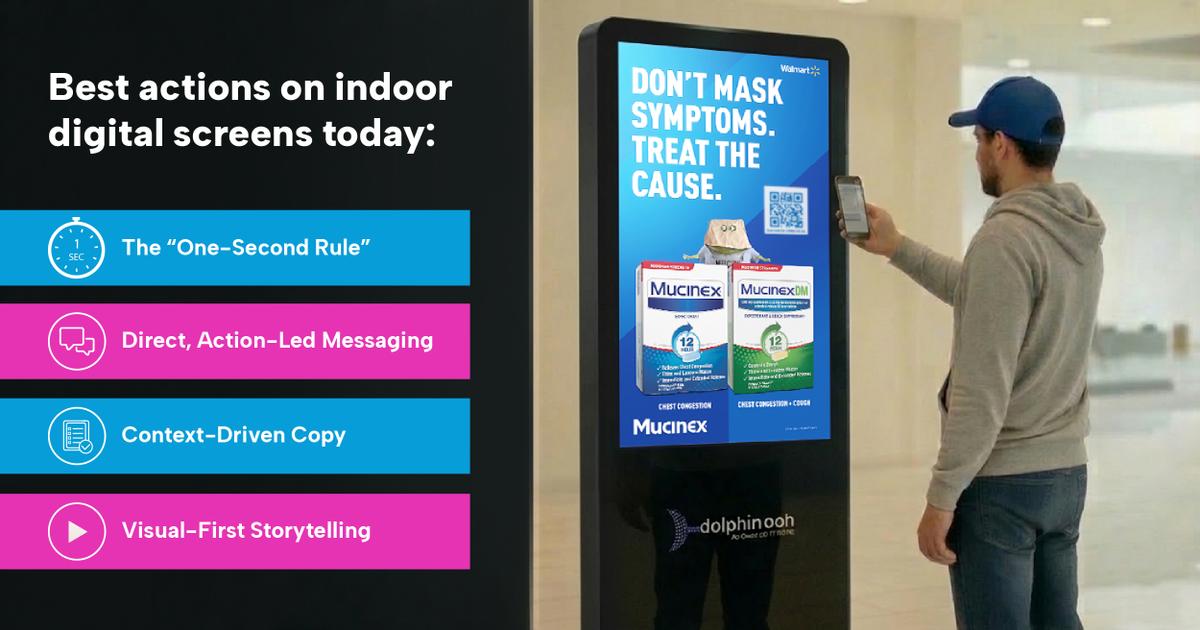
1. The “One-Second Rule”
If someone glances for 1–2 seconds, they should still get the message.
Best practice:
5–7 words max
Brand visible instantly
No complex sentences
2. Direct, Action-Led Messaging
“Try it today”
“Available here”
“Limited time offer”
Why this works:
DOOH viewers are often near the point of purchase. You’re not just building awareness—you’re influencing decisions.
3. Context-Driven Copy
Instead of generic messaging:
“Cold outside? Warm up here.”
“Lunch break? Grab this combo.”
This aligns with the fact that 81% of consumers find context-based ads more relevant
4. Visual-First Storytelling
People don’t read DOOH. They scan it.
Product > Text
Emotion > Explanation
Simplicity > Detail
3. Best Practices for High-Performing Indoor DOOH Creatives
1. Design for Real-World Attention, Not Screens
People are walking, shopping, talking.
Average viewing time is just a few seconds
Your creative must work instantly
2. Use Contrast and Scale
Small text and cluttered layouts kill performance.
Large fonts
Strong color contrast
Clear focal point
3. Keep It Location-Relevant
Indoor DOOH has a major advantage: context
Grocery store → product offers
Restaurant → meal combos
Pharmacy → health messaging
This is why 86% of consumers find DOOH ads helpful in retail environments
4. Avoid Creative Fatigue
Even great creatives stop working over time.
Rotate creatives every 2–3 weeks
Use variations (color, headline, offer)
Test different formats
5. Integrate with Mobile and Digital Campaigns
DOOH doesn’t work in isolation.
Mobile engagement is 2.7x higher when paired with DOOH
Retargeting improves conversions
4. What Actually Drives Conversion (The Real Insight)
Here’s what the data and real-world behavior consistently show:
People notice movement first
They respond to relevance second
They act when there’s clarity and immediacy
And most importantly:
Creative quality directly impacts results.
Even with the same placement and audience, better creative can significantly increase recall, engagement, and conversions.
5. Where Indoor DOOH Has the Advantage
Indoor environments change the game completely:
Longer dwell time (up to 10–30x more than roadside exposure)
The audience is closer to screens
Ads are seen near decision-making moments
This means creative doesn’t just need to “look good.”
It needs to influence action quickly and clearly.
Conclusion
Creativity in indoor DOOH is not about making something flashy. It’s about making something instantly understandable, contextually relevant, and visually impossible to ignore.
The formats that win are simple:
Short, engaging video
Bold, clear visuals
Context-aware messaging
Action-driven design
Because in the end, the goal isn’t just to be seen.
It’s to be remembered—and acted on.
For brands working with Dolphin Digital OOH Media, the opportunity is even stronger. With screens placed in high-traffic indoor environments where decisions happen in real time, the right creative doesn’t just build awareness—it drives immediate impact.
References
- PosterBooking (2025). Digital signage statistics for 2025 – [Digital Signage Trends and Statistics for 2025]
- MediaSignage (2026). Digital signage statistics and industry data – [Digital Signage Statistics 2026]
- ZipDo (2026). DOOH advertising statistics report – [DOOH Advertising Statistics]